
Qridi


Teaching in and leading the IB Primary Years Programme (PYP) can feel both inspiring and overwhelming. For many educators, the challenge is not understanding the program's vision, but knowing where to begin and how to bring IB PYP implementation together in a manageable way.
As an original co-author of the PYP, Christine Orkisz Lang, MEd, PhD, has worked with IB PYP schools around the world and seen the remarkable potential of the framework to transform learning. She has also seen how challenging it can be to translate the IB Primary Years Programme from theory into real classroom and school leadership practice.
That is why she has developed the PYP Roadmap Series: a set of free, interconnected IB PYP teacher and leadership guides designed to help educators navigate the journey with clarity and purpose.
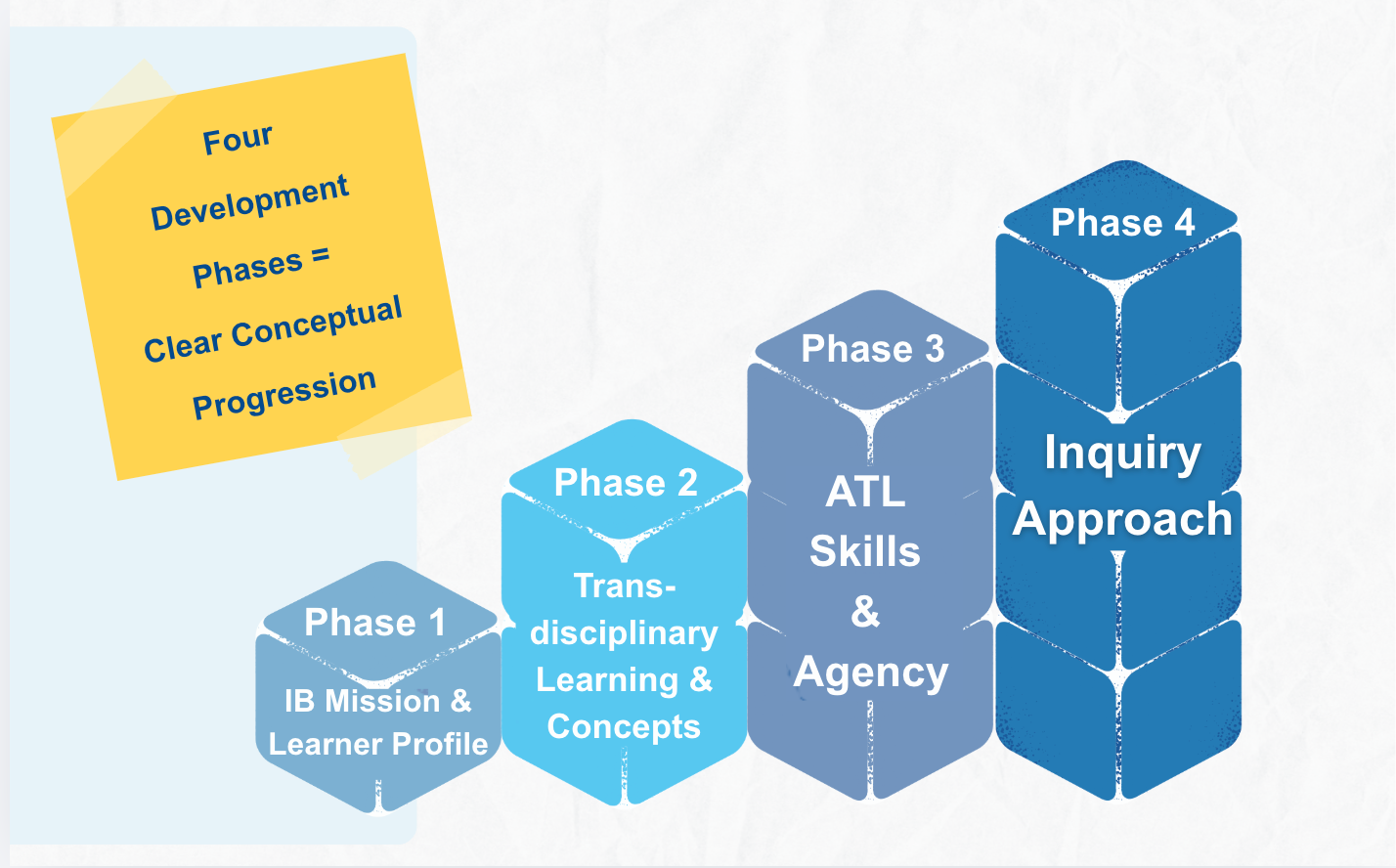
Effective IB PYP implementation develops over time. The PYP Roadmap Series organizes the key elements of the programme into four coherent phases of learning and development. Each phase includes:
The four phases move from a foundational understanding of the IB mission and Learner Profile, through transdisciplinary learning and key concepts, into ATL skills and student agency, and finally to a fully developed inquiry approach. Together, they support clear prioritization, coherent planning, and a structured approach to IB PYP implementation that helps educators from becoming overwhelmed.
The PYP Roadmap Series includes several interconnected free resources for IB PYP teachers and school leaders.
PYP Travel Guides for Teachers and Leaders

The PYP Travel Guides explain all four phases of IB PYP development and their key landmarks. Checkpoints across the roadmap highlight important moments for action, each supported by practical guidance. There are separate guides for teachers and for school leaders, helping each group focus on what matters most at their particular stage of implementation.
PYP Roadmaps for Teachers and Leaders (included in the Travel Guides)

The PYP Roadmaps provide a structured, at-a-glance view of IB PYP implementation across all four phases. Presented in a matrix format, they allow teachers and leaders to see how practice develops over time, focus on a specific stage, and track key elements such as key concepts, ATL skills, and student agency.
PYP Roadmap Checklists for Teachers and Leaders (Included in the Travel Guides)

The PYP Roadmap Checklists are practical tools to support action and reflection throughout IB PYP implementation. They help educators recognize current strengths, identify priorities for development, plan next steps with clarity, and avoid overlooking key elements of the programme.
PYP Essentials Course on IB Exchange (Free, My IB access required)

The PYP Essentials Course is a four-part, interactive, asynchronous series available on the IB Exchange. Each module aligns with one phase of the roadmap and supports educators in deepening their understanding of the PYP framework, engaging with key concepts through unit planning, clarifying IB expectations, and exploring classroom-based examples.

The IB Exchange hosts ongoing, peer-led virtual community events for Primary Years Programme (PYP) educators via Zoom. These free, interactive sessions allow educators to connect, share best practices, and gain insights into PYP curriculum implementation. The next webinar, on 13 May 2026, 17:00 to 18:30 CET, will feature Christine introducing the PYP Roadmap series. Visit the IB Exchange Events Lobby to register for upcoming sessions and access the archive of past recordings.
The PYP Roadmap Series supports a wide range of educators working within the IB Primary Years Programme:
One of the biggest challenges IB PYP schools face is not understanding the programme, but managing its many interconnected elements in practice. Planning, documentation, assessment, and tracking student learning across units and year levels can quickly become complex.
This is where digital tools such as Qridi Core can play a supportive role. By helping schools organize their curriculum, make learning visible, and track progress over time, platforms designed for IB PYP schools allow educators to focus more fully on teaching and learning rather than administration.
You can download the full set of PYP Roadmap materials and begin exploring what matters most at your current stage of IB Primary Years Programme implementation:
Whether you are just beginning your IB PYP journey or looking to strengthen existing practice, these resources are designed to support steady, sustainable growth. Clarity builds confidence. Coherence builds sustainability. And with the right structures in place, meaningful learning in the IB Primary Years Programme becomes not only possible, but also sustainable over time.